Why Coaching Skills are essential for Women Leaders
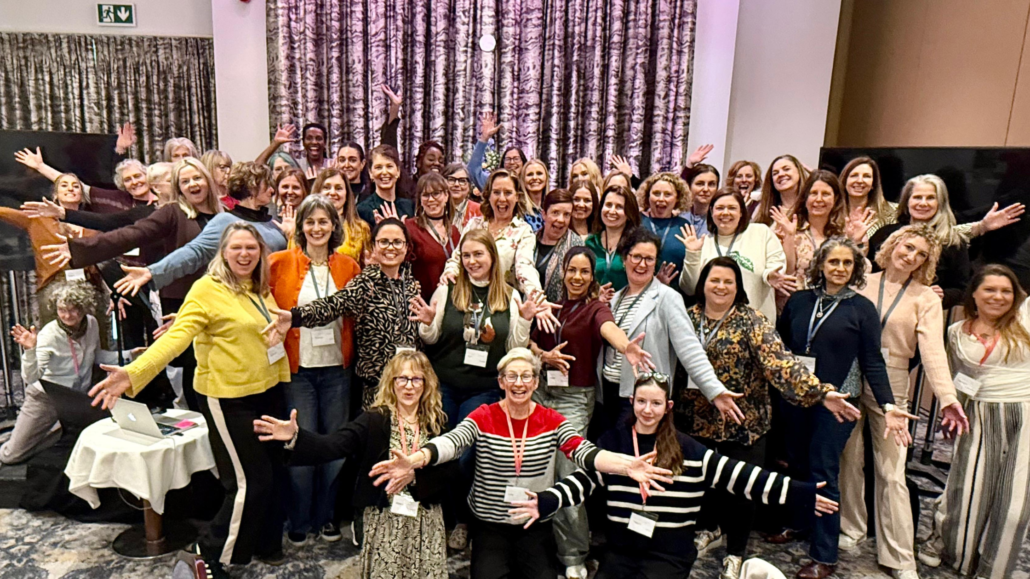
Last week, we gathered with 35 women for our One of many Certified Coach and Leader Intensive.
It’s always surprisingly difficult to describe these weeks from the outside. People often imagine that a coaching training is primarily about learning tools and techniques, and of course, those elements are present.
But what actually unfolds over the course of the week goes far beyond skill acquisition.
This is not just a coaching course. It is an immersive experience in women’s leadership development – one that invites a shift in how you see yourself, how you relate to others, and how you lead.
Who Attends a Women’s Coaching and Leadership Training?
The women who join us are not new to responsibility or leadership.
They are already capable, already experienced, and often already supporting others in meaningful ways. Many are leading teams, running businesses, raising families, or holding significant responsibility in their organisations.
They don’t walk into the room lacking something.
They walk in already full.
Full of responsibility, full of care, and often full of an internal pressure to get things right. Alongside that, there is often a quieter layer – questions that are not always voiced, but are very present:
- Am I good enough to do this work?
- Can I really support others at this level?
- What if I get it wrong?
These questions don’t define them, but they do shape how they show up. And part of the work of the week is gently bringing those patterns into awareness.
The First Shift: Seeing Patterns Clearly
The first shift in any meaningful coaching training is not about doing more. It is about seeing more clearly.
As the week begins, women start to recognise patterns in themselves that may have been running for years, often unconsciously.
These include:
- Over-responsibility
- Overthinking
- Stepping in too quickly
- Carrying more than is actually theirs to hold
There is often a powerful realisation that what has made them successful in many areas of life has also come at a cost.
This awareness is not delivered through instruction or critique. It emerges through experience, reflection, and witnessing others in the room.
Again and again, we hear moments like:
“I’ve been playing too small…”
Or, just as often, a quieter recognition that they have been doing far more than was ever theirs to carry.
There is no judgement in these moments. There is simply clarity, and that clarity begins to create change.
Letting Go of Limiting Beliefs
Once those patterns are seen, something begins to shift.
Beliefs that have felt fixed start to loosen. Old narratives about who they need to be, how much they need to do, how responsible they need to feel for others, begin to soften.
For some women, this is experienced as a clear breakthrough. For others, it is much more subtle and gradual.
One participant described it as:
“A quiet change that crept up on me during the week.”
Not all transformation is dramatic. Often, the most sustainable shifts are the ones that happen steadily, almost without notice, until suddenly you realise that you are thinking and responding differently.
Learning Coaching Skills Through Practice (Not Theory)
A core part of the week is learning practical coaching skills.
We introduce tools such as:
- Devoted Listening™
- Coaching frameworks for structured conversations
- Ways of holding space without taking on others’ problems
- The Women’s PowerTypes™
However, this is not a passive learning experience.
This is experiential learning.
Participants practise coaching in real time, receive feedback, and refine their approach throughout the week. They experience both sides of the coaching relationship – being coached and coaching others.
This is where embodiment becomes essential.
As one woman shared:
“The face-to-face experience of the tools was much more powerful than online.”
Understanding a coaching model is one thing. Being able to apply it in a real conversation, with presence and confidence, is something else entirely.
What Changes by the End of the Training?
By Friday, there is a noticeable shift.
It is not about becoming someone different. It is about becoming more grounded in who you already are.
Women who arrived unsure of their ability to coach begin to trust themselves more deeply. They listen with greater presence, ask better questions, and feel less pressure to fix or solve everything for others.
We often hear reflections such as:
“I can do more than I thought.”
“I can imagine myself as a coach now.”
They are not leaving as finished experts. But they are leaving with real capability. A level of confidence that comes from that lived experience, not just the theory we’ve taught them.
The Power of Group Coaching and Community
One of the most important elements of this training is the group itself.
The environment is intentionally designed to be both supportive and challenging. Women are invited to be open, to reflect honestly, and to learn from each other’s experiences.
This is not about advice-giving or fixing. It is about creating a space where each person can think more clearly and step into their own leadership.
Participants consistently describe the experience as:
Supportive. Energising. Connecting.
And, quite simply, deeply human.
This sense of community is not incidental, it is central to the effectiveness of the training.
The Ripple Effect of Coaching Skills
The impact of this work extends far beyond the training room.
Each woman returns to her life – whether in a corporate environment, a business, or her family – with a different way of engaging with others.
She is:
- Less likely to over-function
- More able to support without absorbing
- Clearer about boundaries and responsibility
And from there, the ripple effect begins.
Teams function more effectively.
Conversations become more productive.
People feel more empowered to take ownership of their decisions.
This is why coaching skills are increasingly recognised as essential leadership skills, not optional extras.
Why This Work Matters (Earlier Than We Think)
Last week, we also had a 15-year-old with us on work experience.
She joined to observe and support, but what became clear very quickly was that she was also recognising something of herself in what she was seeing.
In conversations about pressure, achievement, and the need to get things right, there were moments of quiet recognition.
It was a powerful reminder that the patterns we see in adult women – overachievement, burnout, over-responsibility – often begin much earlier.
This is not just about leadership development.
It is about cultural change.
It is about recognising and shifting patterns before they become deeply embedded.
A New Approach to Women’s Leadership
Quite often during these weeks, I find myself reflecting on the importance of partnership and collaboration.
When women come together in this way – with the right tools, the right support, and a shared intention – something powerful becomes possible.
Because the world does not need more leaders who are already at capacity and pushing themselves further.
It needs a new kind of power.
Women who can lead sustainably.
Women who can support others without losing themselves.
Women who can create meaningful change without burning out.
Curious About Coaching or Leadership Training?
For some of the women in the room last week, this journey began with Elevate: Essential Skills for Coaching Women. A first step into learning coaching skills and exploring a different approach to leadership.
From there, they chose to go deeper.
If you are exploring coaching, leadership development, or simply looking for a more sustainable way to support others, you do not need to have everything figured out. You only need to be willing to begin.